
Insights | Operations & Digital Transformation
Robotics can transform batch-oriented manufacturing and internal logistics. The real advantage, however, comes from choosing the right process, connecting the right systems and designing safety into every stage.
In the semi-process industry, production often combines recipe-driven batches with complex material flows. Chemicals, food and beverage, animal feed and pharmaceutical operations all face a similar challenge: improving throughput and consistency without compromising safety, traceability or flexibility.
Robots, collaborative robots (cobots), automated guided vehicles (AGVs) and autonomous mobile robots (AMRs) can support that ambition. But automation is not simply a question of installing equipment. It is an operational transformation involving people, processes, data and technology.
Where robotics creates value
Start with a process problem rather than a technology demonstration. In semi-process manufacturing, the strongest opportunities are often found where repetitive physical work, process variability or internal transport bottlenecks limit performance.
Benefits may include reduced manual handling, more predictable throughput, improved ergonomics and more reliable process execution. Actual results depend on product characteristics, equipment utilisation, changeover requirements and integration quality.
Choose the technology that fits the task
Industrial robots
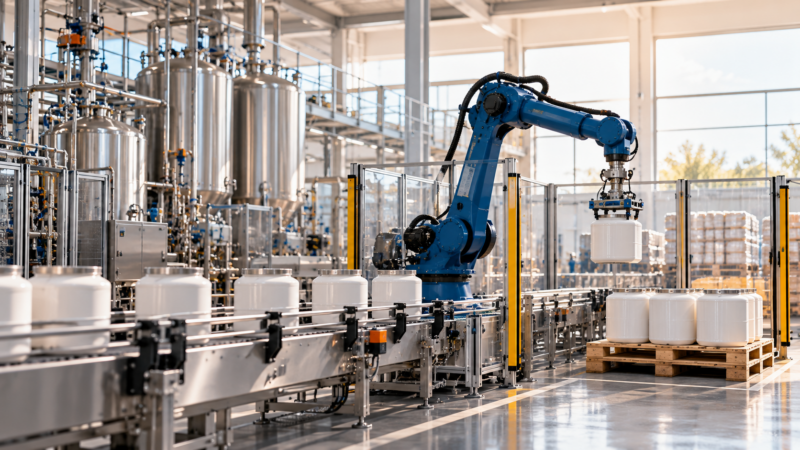
Useful for high-volume, repeatable operations such as palletising, depalletising and packaging. Depending on the application, protective guarding and other safeguards may be required.
Collaborative robots
Cobots can support flexible, lower-payload tasks where people and robotic systems work in proximity. Collaborative does not automatically mean safe without guarding: the full application, including tools, loads and foreseeable contact, needs a documented risk assessment.
AGVs and AMRs
Mobile automation can connect production, warehouses and staging areas. Selection depends on routes, traffic, payloads, facility layout, fleet management and the required level of interaction with staff.
The do’s: six principles for successful implementation
- Define a measurable business case. Identify a specific bottleneck and set baseline measures: throughput, labour hours, errors, injuries or near misses, changeover time and total cost.
- Start with a bounded pilot. Select one repeatable process, validate safety and reliability, then scale based on evidence rather than assumptions.
- Design the complete workflow. Account for upstream supply, downstream capacity, exceptions, cleaning, maintenance and product or recipe changes.
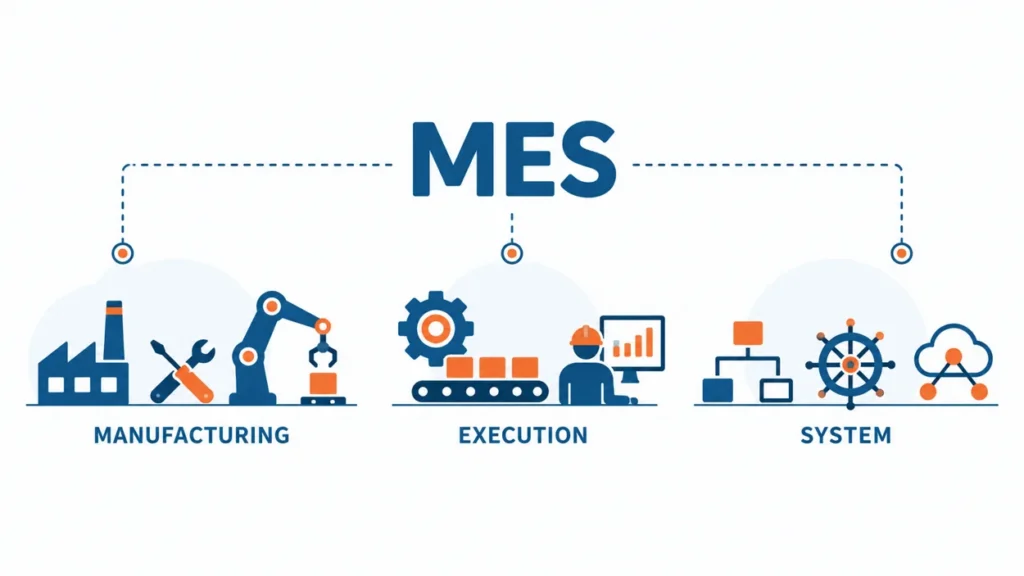
- Connect production and logistics data. Define interfaces with MES, ERP and WMS where relevant. A robot without accurate work orders, inventory positions or batch information may simply automate a disconnect.
- Involve operators and maintenance teams. Their knowledge of real-world exceptions is indispensable. Train them for safe operation, recovery procedures and continuous improvement.
- Build security and safety into the architecture. Document access controls, network segmentation, vendor support responsibilities, machine safety and change management before commissioning.
The don’ts: five mistakes to avoid
- Don’t automate an unstable process. Standardise key procedures before adding complexity.
- Don’t treat a cobot label as a safety certificate. Assess the complete cell and intended human interaction.
- Don’t overlook integration and downtime. Recovery, maintenance windows, spare parts and software dependencies affect actual productivity.
- Don’t evaluate ROI on purchase price alone. Include engineering, installation, training, software, safeguarding, support and lifecycle costs.
- Don’t leave cybersecurity to the final phase. Remote access, industrial controllers and connected fleets expand the operational attack surface.
A practical implementation roadmap
- Assess: map material flows, batch constraints and automation opportunities.
- Prioritise: rank opportunities by impact, feasibility, safety and payback.
- Specify: define process requirements, interfaces, acceptance criteria and ownership.
- Pilot: test a representative use case with operators and integrators.
- Scale: standardise deployment, training, monitoring and continuous improvement.
Safety and regulatory considerations
In Europe, machinery safety obligations need to be assessed for the equipment and its integration. The revised ISO 10218-1:2025 standard addresses industrial-robot safety requirements; associated integration requirements and application-specific risk assessments also matter.
At the time of this update (October 2026), the EU Machinery Regulation (EU) 2023/1230 is scheduled to apply generally from 20 January 2027. Project teams should verify the requirements relevant to their equipment, installation date and jurisdiction.
This article provides general operational guidance, not a substitute for a machinery conformity assessment, specialist safety engineering or legal advice.
Taking the next step
The most successful automation programmes connect operational improvements with a realistic business case, robust system integration and engaged employees. Robotics becomes valuable when it is part of a coordinated operating model—not a stand-alone purchase.
Looking to improve your operations?
Merlyn Consult brings together independent strategic insight and specialist expertise across supply chain management, process optimisation and digital transformation.
Related reading
- OEE and Predictive Maintenance: The Key to Improved Operational Performance
- AI and Machine Learning Are Transforming the Transport Sector
- The Power of MES-WMS Integration
- DH Automation Technology BV (external reference retained from the original article)